CGR Critical Raw Materials
Midstream: Accumulation and in-use stocks
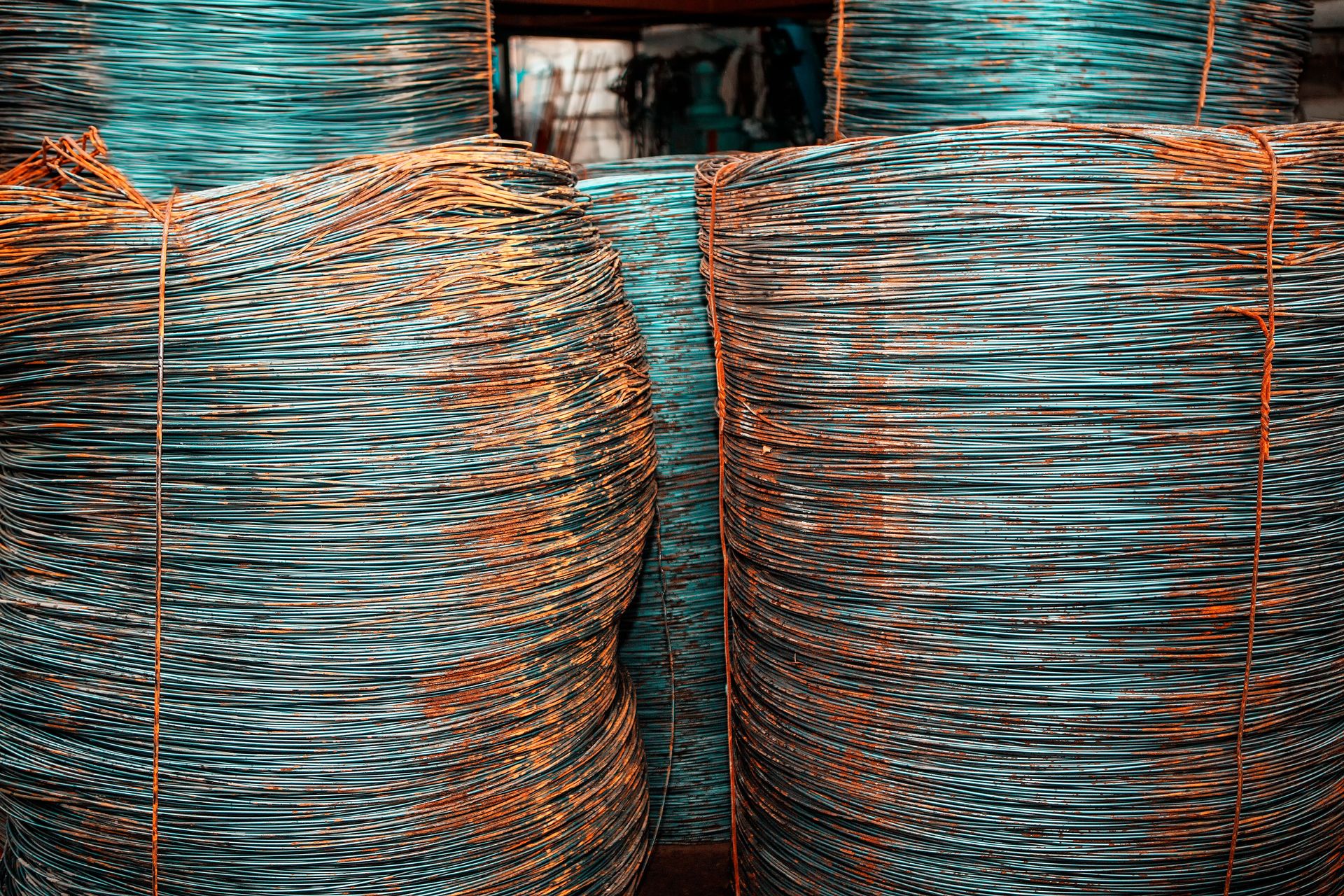
The copper the world has already used has not disappeared—it has accumulated in products and infrastructure. In-use stock is projected to continue increasing through 2050, rising from approximately 380 million tonnes in 2020 to 650 million tonnes in 2050. Equally important is the composition of that stock. Wire and cable dominates overwhelmingly, and its share of total stock is projected to increase further rather than diversify, from just 15 million tonnes in 1950, to 280 million tonnes in 2020, reaching a projected 510 million tonnes in 2050. This reflects copper's central role in the built environment, energy systems, and digital infrastructure, from the wiring inside buildings, energy storage and power transmission networks to the charging infrastructure supporting the growing electric vehicle market. Other material streams—including tube, sheet and plate, alloys and electronic grade copper—also continue to accumulate, but at a much more modest rate.64 As a result, future stock growth remains concentrated in the applications that underpin infrastructure and the energy transition.
Chart 11, In-use stocks for copper
This stock provides the crucial link back to the supply story discussed above. The large volume of copper embedded in long-lived infrastructure represents a substantial future source of secondary supply—but only once it reaches the end of its service life. Wire and cable applications typically remain in use for around 40 years, compared with about eight years for electronics, so the same conductivity and corrosion-resistance properties that make copper valuable in durable infrastructure also delay its return to the system. Copper's in-use stock is therefore a strong circularity asset, but one whose value is realised only after decades of use.
As highlighted above, future demand increasingly stems from the material needs of the energy transition and digitalisation. As a result, the character of copper stock accumulation is also set to shift. Since both traditional and energy-transition-related demand involve relatively long-lived applications, the pace of accumulation depends less on how long copper stays embedded and more on how quickly new deployment adds to that stock.65 Historically, embedded copper has grown at the relatively steady pace of construction and infrastructure build-out. The energy transition compresses a much larger volume of deployment—energy grids, renewables, electric vehicles, data infrastructure—into a shorter period. As this copper enters applications that will hold onto it for years or decades, faster deployment adds to in-use stock more quickly than material returns through end-of-life recovery, extending the lag between primary materials entering stocks and secondary materials emerging for reuse.
References
- 64. This is also verified by: Ben McGregor. (2026). The Copper Surplus Mirage: Could a Tariff Rejection Create a Buying Opportunity? Retrieved from: Canadian Mining Reports; and by: Global Trade Algorithmic Intelligence Centre (GTAIC). (2026). Global Copper Tubes and Pipes Trade: Key Trends and Market Shifts (LTM 2025-2026). Retrieved from: GTAIC website
- 65. Wire and cables are the main material streams for both infrastructure and clean energy related end-uses, thus both have an average lifetime of 40 years, the actual lifetime varies based on the application.
The Circularity Gap Report is an initiative of Circle Economy, an impact organisation dedicated to accelerating the transition to the circular economy.
© 2008 - Present | RSIN 850278983